The committee met to discuss terms of reference for the Section 89 inquiry that will probe events after US dollars were stolen from Ramaphosa's farm.
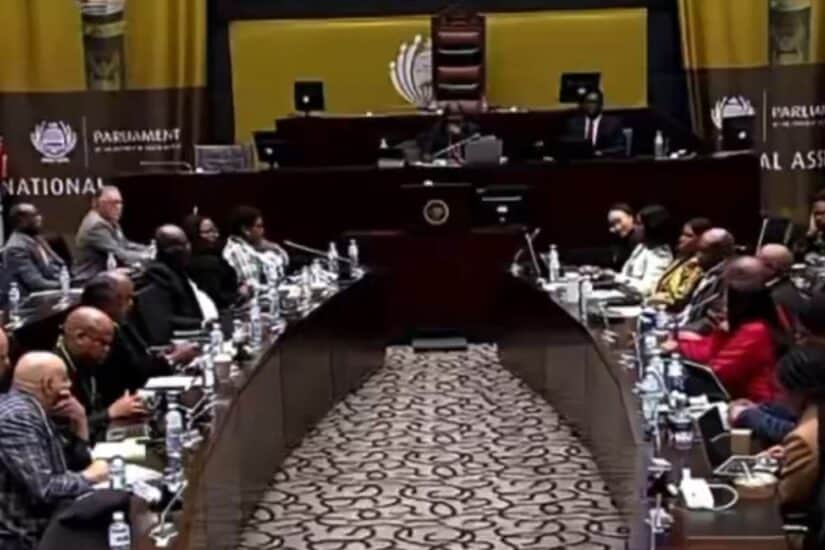
A meeting of Parliament’s Impeachment Committee on 24 June 2026. Picture: Screengrab.


Parliament’s Section 89 Impeachment Committee on Wednesday resolved to begin appointing an evidence leader to steer the inquiry, even as fiery clashes erupted over Speaker Thoko Didiza’s refusal to oppose President Cyril Ramaphosa’s urgent court bid to halt the process.
The committee met to consider draft Terms of Reference, a nearly 40‑page document, and the appointment process for evidence leaders.
Candidates
Chairperson Makashule Gana confirmed that parties have until 10 July to nominate candidates, after which a preferred name will be recommended to Parliament for formal appointment.
Gana explained that the appointment of assistant evidence leaders would be left to the discretion of the lead, ensuring an efficient working arrangement.
“Furthermore, the committee has agreed to allow political parties 10 working days to study and reflect on the draft Terms of Reference and make written submissions to it by Friday, 10 July 2026. The submissions by parties will form part of the draft Terms of Reference the committee will adopt and use to guide its work throughout the enquiry.”
Didiza criticised
The meeting was marked by sharp criticism of Speaker Didiza.
EFF leader Julius Malema argued that the Speaker had failed in her constitutional duty to defend Parliament and its oversight processes.
He insisted that Didiza should have challenged the president’s court application.
“She acted wrongfully by not opposing. The president is challenging the panel report of Parliament. The speaker’s advice, legal advice, was the only one option, oppose, there was no two options.
“The Speaker couldn’t rely on the legal advice of our committee. She went to get her own legal advice. Then the legal advice told her what she didn’t want to hear.
“Then she says, when she does interviews, which is dishonest, the legal advice said, I also have an option to abide. Her advice doesn’t have that option. It is your advice which has got that option,” Malema said.
MK party
The MK party’s Andile Mngxitama also weighed in, saying that Didiza must be persuaded to do what is right to protect the integrity of Parliament.
“I think that with regard to the Speaker’s attitude, this committee must take a much stronger attitude towards the abdication of her responsibility. She has the institutional leadership to protect the work of this Parliament, and the highest court has ruled that this Parliament must do its work.
“The Speaker can’t throw her hands out and say that let the process take its course; she has to take a position to essentially protect the institution, because she is the head.
“Chair, I think that more than expressing a disappointment, we need to find a way to persuade her to do what is correct,” Mngxitama said.
With Ramaphosa’s interdict pending in the Western Cape High Court, NCC leader Fadiel Adams accused the President of “going to extreme lengths to avoid the committee,” warning: “We can’t leave a backdoor open for him to escape accountability.”
Impeachment committee
Despite the political storm, Gana stressed that the committee’s work must continue. He said correspondence received, draft Terms of Reference, and the appointment process for evidence leaders had all been considered.
“The committee also agreed in principle that additional specialist support may be required, including investigators with expertise in forensic investigations, exchange control matters, and data analysis.”
Amended rules
On Tuesday, the National Assembly adopted amended rules governing the 31‑member impeachment committee investigating allegations against Ramaphosa over the 2020 theft of foreign currency from his Phala Phala game farm.
The move paves the way for the committee to begin its work, despite Ramaphosa’s urgent bid to suspend it pending his review of the Section 89 panel report, which found he may have breached the Constitution.
Interdict
Ramaphosa approached the Western Cape High Court seeking an urgent interdict while he challenges the report.
His application aims to prevent the start of the impeachment inquiry until his separate review of the report has been finalised.
Last week, Ramaphosa defended Didiza’s stance, insisting she is acting independently and in strict accordance with the constitution by choosing not to oppose his urgent application to interdict the impeachment committee.