


Electricity Minister Kgosientsho Ramakgopa says Eskom board chairperson Mteto Nyathi will be given a three-year extension.
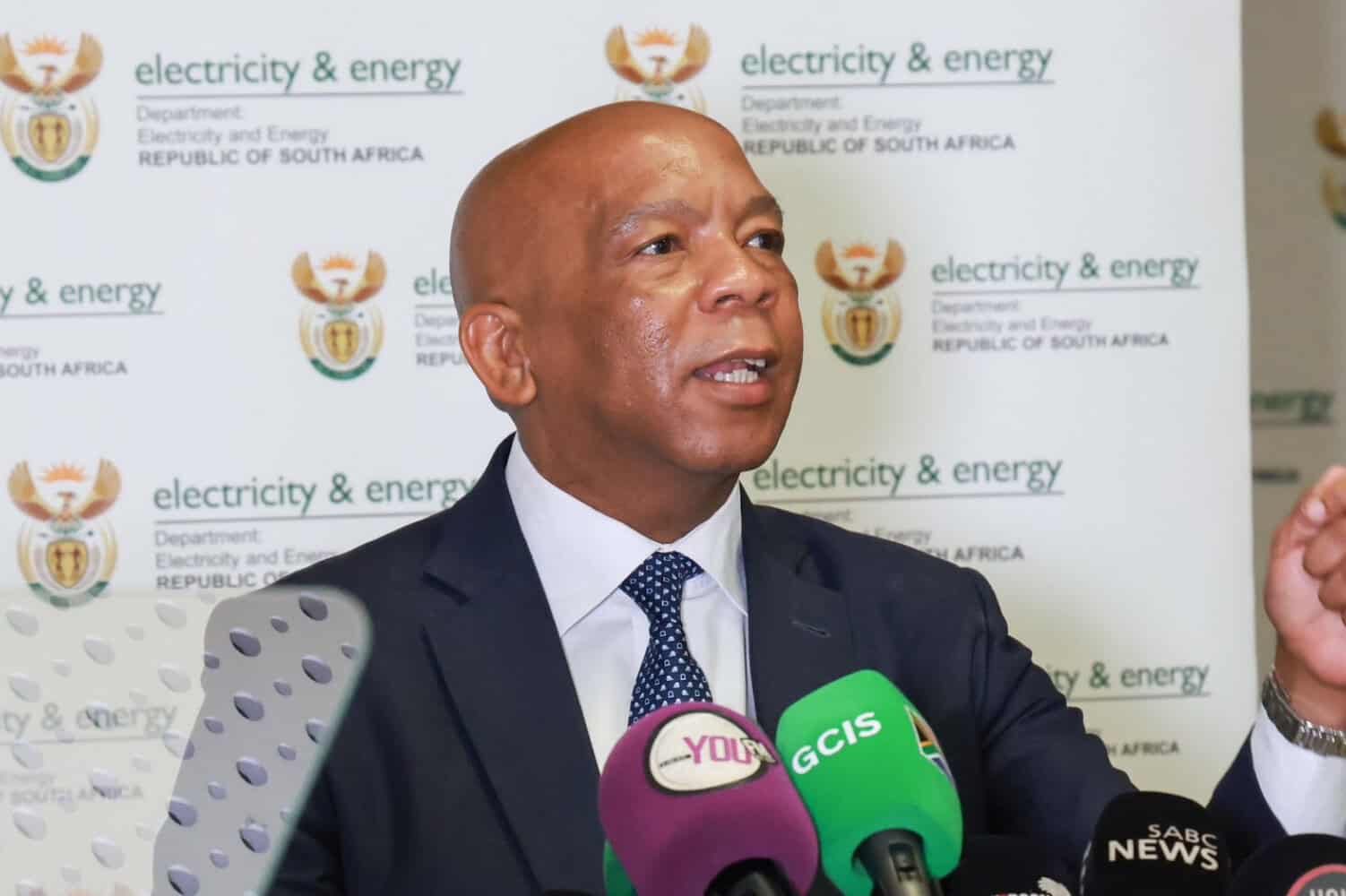
Minister of Electricity and Energy Kgosientsho Ramakgopa. Picture: X / @DOEE_ZA


Electricity and energy Minister Kgosientsho Ramakgopa is challenging Eskom to lead South Africa into an age of reindustrialisation.
Ramakgopa outlined parts of his “Eskom 2.0” vision on Friday, placing the entity at the forefront of economic growth.
While Eskom still generated 70% of South Africa’s electricity, he said the entity would be required to embrace an ever-evolving role.
“We are moving away from a vertically integrated monopoly into one that has been liberalised and has multiple actors.
“We have had 103 years of Eskom 1.0; now we must transition. We have reached a point of inflexion as a result of a multiplicity of factors,” said Ramakgopa.
Nuclear investment and AI integration
Thanks to surplus electricity generation, as well as the administrative and technical gains facilitated by the Electricity Regulation Amendment Act, the minister said Eskom was ready to make that transition.
“What the amendment has done is to upend our conceptualisation of what electricity looks like, or what the electricity value chain looks like.
“Sustaining energy security now requires structural changes in how Eskom plans generation, expands the grid, serves customers and participates in a changing electricity market,” Ramakgopa said.
The minister said there would be concessions for transmission, distribution reforms, and expansion into southern Africa to increase its market share.
He spoke of a plan to lay 14 500km of new transmission line at a cost of R440 billion, and reiterated the pending introduction of 5.2 gigawatts of nuclear generation capacity and a further 10 gigawatts via a nuclear industrialisation programme.
“We have every intention of industrialising on the back of that build programme.
“Eskom is at the centre, and that is the mandate that we are reinforcing. We will be coming back to the general public, sharing with you on how we are going to roll out that nuclear build programme,” Ramakgopa said.
Additionally, he stated that there would be no more bailouts for Eskom, no double-digit tariff increases in the future, and that “artificial intelligence is going to be a significant part of the work we are doing”.
Municipalities and free electricity
Ramakgopa stressed that this transition would be “complex” and warned that, if not done right, it would threaten the country’s “electricity sovereignty”.
He noted that municipal debt owed to Eskom was nearing R450 billion and posed the greatest threat to the country’s energy market and his reform agenda.
Despite the debt, he promised that a shake-up of the indigent register and distribution channels would allow for greater access to free electricity.
“We are going to ensure that everyone who is entitled to free basic electricity gets it.
“There is a R21 billion allocation for poor households to get free basic electricity. They are not getting it because the mechanism of getting it to the end consumer goes through municipalities.
“Municipalities are under pressure. When they receive that money, they reallocate it to other spending pressures,” Ramakgopa said, adding that Eskom would be tasked with figuring out the logistics.
The minister confirmed that Eskom board chairperson Mteto Nyathi was to be given a three-year extension.
Nyathi said Eskom would continue to squeeze municipalities through Distribution Agency Agreements (DAA) and National Treasury’s withholding of equitable share payments.
He said the DAAs allowed Eskom to rectify years of infrastructure neglect and billing lapses, while the equitable share jolted municipal administrators.
“We have seen how powerful this tool can be. We were owed by the City of Johannesburg a significant amount of money, and now the city has been able to pay us.
“That is largely because of the working together of the minister, National Treasury, and the city working together to make sure we clear that debt.
“We need to have that across all of these municipalities,” Nyathi stated.



