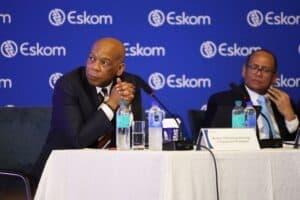
The petition, addressed to Nersa, called on the regulator to reject Eskom's proposed increase outright.
The DA says Eskom’s promise to keep tariff increases in the ‘single digits’ offers little comfort to consumers. Picture: Gallo Images


A civil society petition opposing Eskom’s proposed 2027-28 electricity price increase has surged from under 2 000 signatures to nearly 5 800 in days, ahead of the National Energy Regulator of South Africa (Nersa) public hearing on 8 October.
The petition organised by the Better Governance Initiative (BGI) objecting to Eskom’s proposed 8.83% electricity tariff increase for the 2027-28 financial year had gathered more than 5 800 signatures by Thursday, up from just 1 800 on Monday.
Signatures climbed steadily through the week
The petition’s growth reflected mounting public frustration with the proposed increase, which Eskom submitted to Nersa on 31 July 2026 as part of its Retail Tariff Structural Adjustment application for the 2027-28 financial year.
BGI founder and director Sabelo Chalufu said residents were using the public participation process to make their objections heard before regulators made a final call.
Asked why the organisation was targeting this specific application rather than the earlier multi-year pricing decision from which it flowed, Chalufu explained that Nersa’s decision on the current application remained open to public input even though the underlying revenue determination had already been settled.
“To put it colloquially, the ‘MYPD6 decision’ ship has sailed, and we are now within the operative period of the MYPD6.”
He said this was why the organisation and the public had become involved now.
What the petition demands
The petition, addressed to Nersa, called on the regulator to reject Eskom’s proposed increase outright.
It opened by identifying the signatories as South African electricity consumers objecting to the tariff hike through BGI.
It then stated its central demand in capitals.
“WE DEMAND THAT NERSA DECLINE ESKOM’S PROPOSED 8.83% TARIFF INCREASE FOR 2027-28!”
The document highlighted the scale of tariff increases over time, noting that electricity prices had risen 937% between 2007 and 2024, while inflation rose only 155% over the same period, citing Nersa’s Draft Market Inquiry Report from June 2026.
It also referenced Eskom’s recent financial results, noting the utility’s second consecutive profitable year, with a net profit of R30.3 billion for the year ended March 2026.
The petition further argued that South African consumers, whether unemployed, grant-dependent or servicing high levels of household debt, were poorly placed to absorb another increase, citing unemployment, poverty and municipal debt figures from Stats SA, the South African Reserve Bank and DebtBusters.
BGI founder defends the campaign’s focus
Chalufu, who described himself as a former political staffer and ward councillor before founding BGI, rejected the suggestion that Eskom’s profitability undercut the case for declining the increase.
Asked what should happen if Nersa rejected the 8.83% figure, he said the organisation would support that outcome without reservation.
“If Nersa declines the 8.83% increase, that would be good, and would accord with our demand. We would welcome that wholeheartedly!”
He argued this would ease pressure on households and small businesses alike, saying residents would retain more of their income and businesses would face less pressure to raise prices. He acknowledged, however, that a full rejection was not the most likely outcome.
“We understand, and reasonably suspect, that Nersa may, after having engaged all submissions received, nevertheless grant ESKOM an increase, but an increase that is less than the proposed 8.83%.”
He added that the public participation process existed precisely to let residents shape that outcome.
“Nersa exists, in part, to regulate the relationship between the two (ESKOM and customers), at least as relates to price…and this public participation process affords residents an opportunity to have their say so as to influence Nersa’s decision.”
On what success would look like for the campaign, Chalufu said the organisation’s ambitions were straightforward.
“Our first prize would be Nersa outright declining any increase.”
He pointed to Eskom’s recent financial performance as evidence the utility could withstand a lower increase, noting it had doubled its profits over the previous two years partly on the back of earlier tariff hikes.
He said the organisation’s core concern remained affordability.
“Electricity is consuming an ever-increasing proportion of our budgets, and it is hitting those most in need the hardest.”
A campaign with more to come
The petition described itself as “the first component of a sustained campaign” on the cost of electricity, with BGI signalling that a fuller written submission to Nersa would follow, incorporating direct public evidence and documented impacts on households and small businesses.
Chalufu confirmed that a more detailed submission was being prepared for the public hearing scheduled for 8 October 2026, but declined to disclose its contents in advance.
“We are in the process of developing our detailed submission and will make it publicly available and share it with all the relevant stakeholders as soon as it is ready. It would not be prudent, or desirable, to disclose the substantive details at this point.”
He also linked the electricity tariff campaign to BGI’s broader advocacy on municipal funding, noting that the organisation had separately made a parliamentary submission this year arguing for an increased equitable share of nationally raised revenue for local government.
Chalufu said a better-funded local government sector was central to resolving the debt chain between households, municipalities and Eskom.
“There are multiple examples where, once municipalities receive their equitable share allocations, they are able to pay the bulk service providers, being Eskom and the Water Boards. The City of Joburg is the most recent such example.”
Nersa’s consultation paper on the application confirms that written comments on the 2027-28 ERTSA application close on 2 October 2026, ahead of the public hearing on 8 October, with a final decision from the Energy Regulator expected on 26 November 2026.