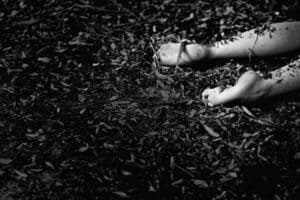
The killings of women in Ekurhuleni revive chilling memories of SA's most notorious serial killer as police falter and women shoulder the burden of fear.

Elizabeth ‘Tsontso’ Moselakgomo is one of eight women found murdered in Ekurhuleni. Picture Supplied


The ghost of serial killing once again haunts South Africa.
The discovery of seven women’s bodies around the East Rand has revived chilling memories of Moses Sithole, the serial killer whose reign of terror in the mid-1990s left at least 37 women and one toddler dead.
In 1997, I was subpoenaed to testify against Sithole at the High Court in Pretoria while working as a reporter for The Star.
His conviction was meant to close the chapter on such nightmares. Yet, here we are, 29 years later, with bodies piling up and fear spreading once again.
Before his crimes were exposed, I had interviewed Sithole about his supposed charity organisation, which he claimed helped abused children reunite with their families.
I accompanied him to Soweto and Atteridgeville, watching him reconnect abused children with parents.
In August 1995, Sithole was linked to one of the victims, but he disappeared once police uncovered his prior rape conviction.
Two months later, after his identikit circulated in the media, he phoned me on the office line.
“Mandla, this is Moses. I want you to help arrange a meeting with the police so I can hand myself over to them,” he said.
He claimed 76 victims – twice the official tally – and gave directions to one of the bodies to prove his identity.
When police cornered him in Johannesburg, he attacked a constable with a hatchet before being shot and arrested.
As I testified, Sithole fixed his gaze on me and smiled – a chilling gesture in the dock.
My evidence became crucial in securing his conviction.
On 5 December, 1997, he was sentenced to 2 410 years in prison, where he remains today.
Now, investigators are uncertain whether the East Rand killings are the work of one predator, or multiple perpetrators.
One victim, Elizabeth “Tsontso” Moselakgomo, a 38-year-old runner, was identified after days of agonising uncertainty.
While police have arrested a suspect in connection with the first July murder, women have been advised to “walk or run together”.
But what about the woman who leaves home alone at dawn to catch a taxi to work?
What about the runner, nurse, teacher and cleaner – those who cannot choose their hours or companions?
Telling women to “stay indoors” or “walk in groups” is policing women’s freedom instead of policing men’s violence.
Safety is not a checklist for women – it is a duty of the state.
It is tempting to focus solely on women’s behaviour rather than to hunt for the “new Sithole”.
But the real indictment lies elsewhere. The state’s failure to prioritise women’s safety, the police’s inability to detect patterns and society’s tolerance of gender-based violence all conspire to create fertile ground for serial killers.
Every uninvestigated case, every ignored complaint, every shrugged-off disappearance shields killers from justice.
The Ekurhuleni killings remind us that Sithole’s shadow still looms – not because he lives, but because the conditions that enabled him remain.
Until police treat femicide as a national crisis, until communities refuse to normalise violence against women, until the state invests in prevention rather than post-mortem press conferences, the cycle will continue.
For me, these killings are not just another crime story. They are a brutal reminder of how little has changed since I testified against Sithole in 1997.
His conviction was supposed to mark the end of serial killing as a recurring nightmare. Yet, women are still living in fear…