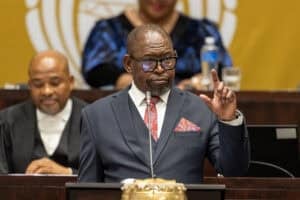
Dlamini-Zuma implored women to walk away from abusive marriages rather than endure domestic violence pain.
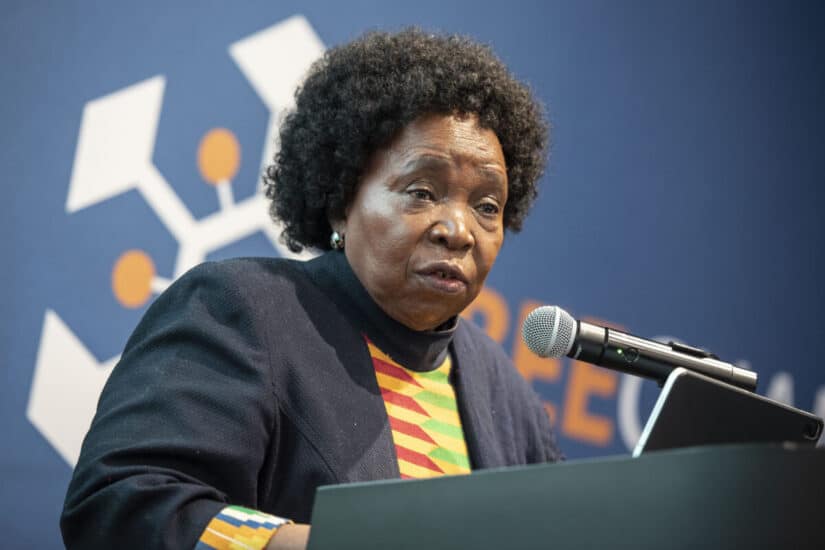
Dr Nkosazana Dlamini-Zuma. Picture: Michel Bega/The Citizen


ANC stalwart and former Cabinet minister Dr Nkosazana Dlamini-Zuma has implored women to “walk away” from abusive marriages rather than endure the pain of domestic violence.
Speaking at the recent Executive Red Carpet Business and Leadership Network Gala in Johannesburg to support the fight against gender-based violence (GBV), the 77-year-old veteran politician shed her political mantle and spoke as a parent.
Dlamini-Zuma urges women to walk away from abusive marriages
Deeply moved by the harrowing testimonies of survivors at the event, she warned that too many women cling to marriages at all cost, even when the cost is their lives and limbs.
“This must stop,” she said, urging women to prioritise survival and dignity over societal expectations.
Among the testimonies that shook the audience was that of burn survivor and gender-based violence activist Thembi Maphanga, known as Ms T, who endured years of frequent abuse at the hands of her husband.
What began as hidden bruises escalated into a nightmare: one evening in 2010, her husband locked her and their two-year old twin daughter, Kamo, in a room, doused her with petrol, and set her alight.
Despite her desperate pleas, he struck the match and fled through a window, leaving mother and child trapped in the inferno. Neighbours rushed to help; one braved the flames to rescue the crying child, who tragically died two days later.
Miraculously, Ms T survived, though her face was permanently disfigured. She spent months in a coma, awakening to the devastating news that now she had lost both twins – one at birth, the other in the fire.
Burn survivor spent months in coma after being set alight
Cruelty compounded her trauma: neighbours mocked her appearance and social media labelled her a “spook”.
Yet she persevered, supported by a compassionate employer who reserved her job and later found her a role suited to her condition despite her two-year absence from duty.
Her resilience embodies the seminar’s message: survival is possible, but silence is deadly.
Dlamini-Zuma said abuse often begins in childhood. “A potential abuser starts as a boy who bullies his sisters at home, with parents dismissing the behaviour as normal,” she said. Left unchecked, this pattern grows into abuse of girlfriends, wives and families.
She condemned societal tolerance of violence. Her critique extended to law enforcement. Too often, she said, police officers shame rape victims by blaming their clothing.
“As women we have a right to dress the way we want. That should never invite molestation,” she said, calling for the urgent re-education of officers and communities alike.
Activist trafficked to Nigeria and abused at TB Joshua church
More testimony came from activist Sihle Sibisi, who recounted being trafficked to Nigeria as a teenager and abused at the church of the late evangelist TB Joshua.
For four years, she endured sexual, emotional and psychological torment, while her own mother – a devoted follower – turned against her.
Back home, Sibisi faced relentless stigma. When her daughter later died of an aneurysm, neighbours claimed it was divine punishment for speaking against Joshua.
“Women were cutting down my tree,” she recalled. “Nobody came to say, ‘let’s find out’.”
Her vindication came years later when a BBC documentary exposed widespread abuse in Joshua’s church.
Today, Sibisi leads the Kwanele Foundation, dedicated to supporting survivors and breaking the silence around abuse in religious institutions.
Tragic intersection of race, gender and violence
The seminar also heard from Mmamaphuleng Manamela, whose story reflects the intersection of race, gender and violence.
Born during apartheid after her black domestic worker mother was raped by a white farmer, she grew up ostracised by both communities.
Her father’s family disowned her, while white neighbours and farmers threatened her mother into silence and offered to kill the child.
Her adult life brought further pain. In marriage, she was repeatedly molested by a husband who claimed he was “doing her a favour” by marrying her.
“Fortunately, the biggest blessing of that marriage was three very beautiful children, who were whiter than me anyway,” she said.
Yet even motherhood was shadowed by prejudice, as she had to explain to her children why they looked different from the rest of the black family.
Communities must confront violence at roots – NDZ
Eventually, she divorced and later found healing with Martin Manamela, whom she described as “a gift from God”. Their shared experiences of failed marriages became the foundation of a loving partnership.
Dlamini-Zuma’s message included that women must not endure abuse in silence, communities must confront violence at its roots.
“Why rape? I have never understood,” she said, her voice heavy with frustration. “But these things still happen. Abuse must not be tolerated – at home, in society, or anywhere.”