Servicing hiccups and an out-of-sorts steering were the main issues during the flagship cab-and-a-half D-Max's tenure.
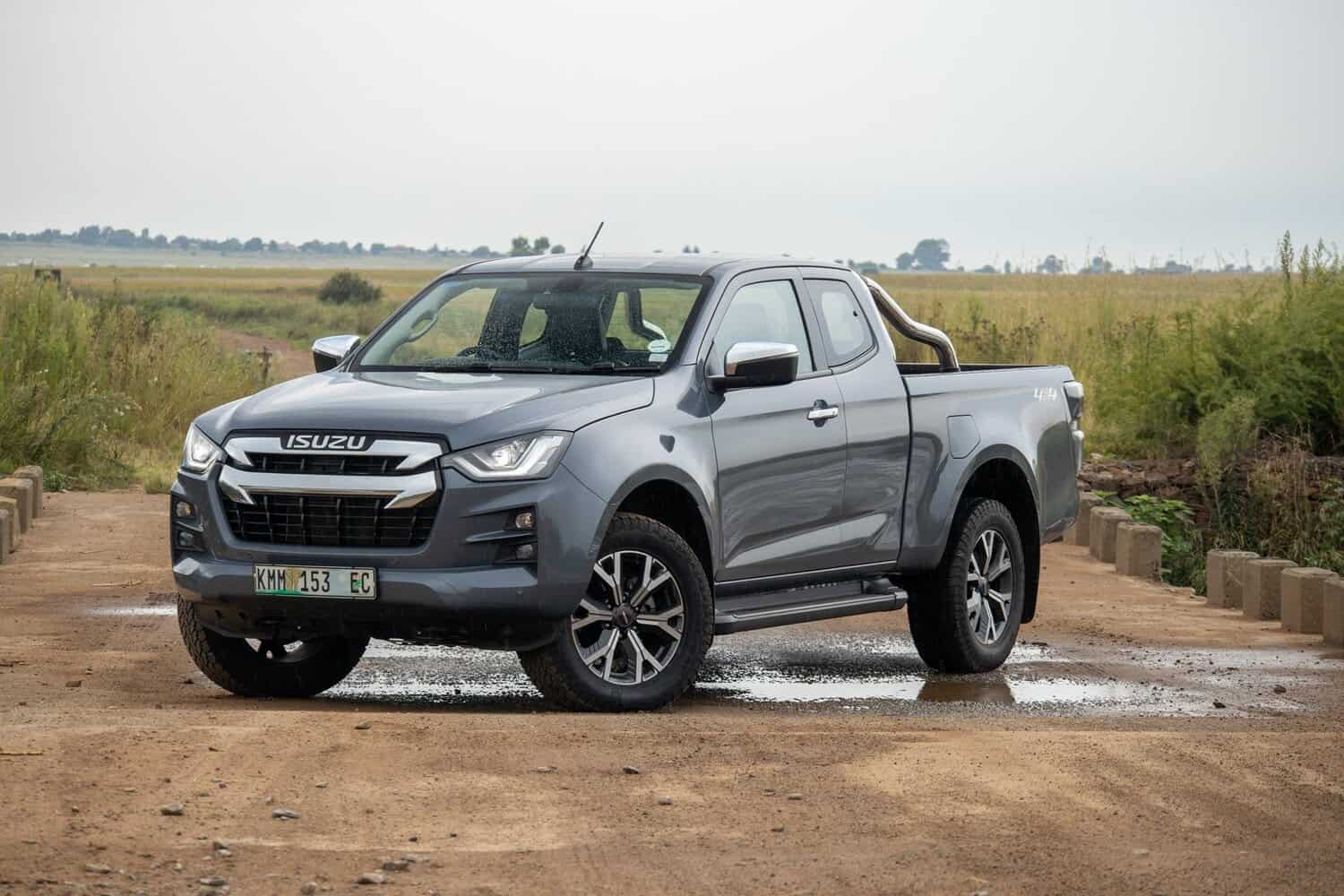
After three months, The Citizen’s long-term Obsidian Black Isuzu D-Max 300 Extended Cab 4×4 LSE auto has returned home. Picture: Rynhardt Steenkamp


After three months and 2 765 km, our long-term Isuzu D-Max 300 LSE Extended Cab 4×4 auto has returned home.
No easy tenure
The flagship cab-and-a-half derivative of the D-Max range, the LSE’s tenure included the daily commute, waiting at O.R. Tambo International Airport a few times, and standing idle as a result of the influx of test vehicles.
Tasked with garden renovations by Motoring Head Jaco van der Merwe over the festive season, the D-Max’s final months were a largely quiet affair involving more commutes, running errands and finally, a small jaunt off-road.
ALSO READ: Gardening made easy with the willing Isuzu D-Max Extended Cab
Having replaced the single cab, two-wheel drive 300 LS auto that served us before December, the past three months went by without hassle, apart from the issue of it having seen better days around the cabin.
What’s more, upon collection, the wheel alignment was completely out, something that prevailed even after being “fixed” during the service.
Service time
As it also had been delivered with abnormally high mileage for a press vehicle of nearly 15 000 km, its stay involved a visit to a dealer for its routine 15 000 km oil service.
Booking a vehicle for a service is something that seldom happens to motoring scribes, however, with the oil change indicator suggesting otherwise, we opted to take the D-Max to the nearest dealer.
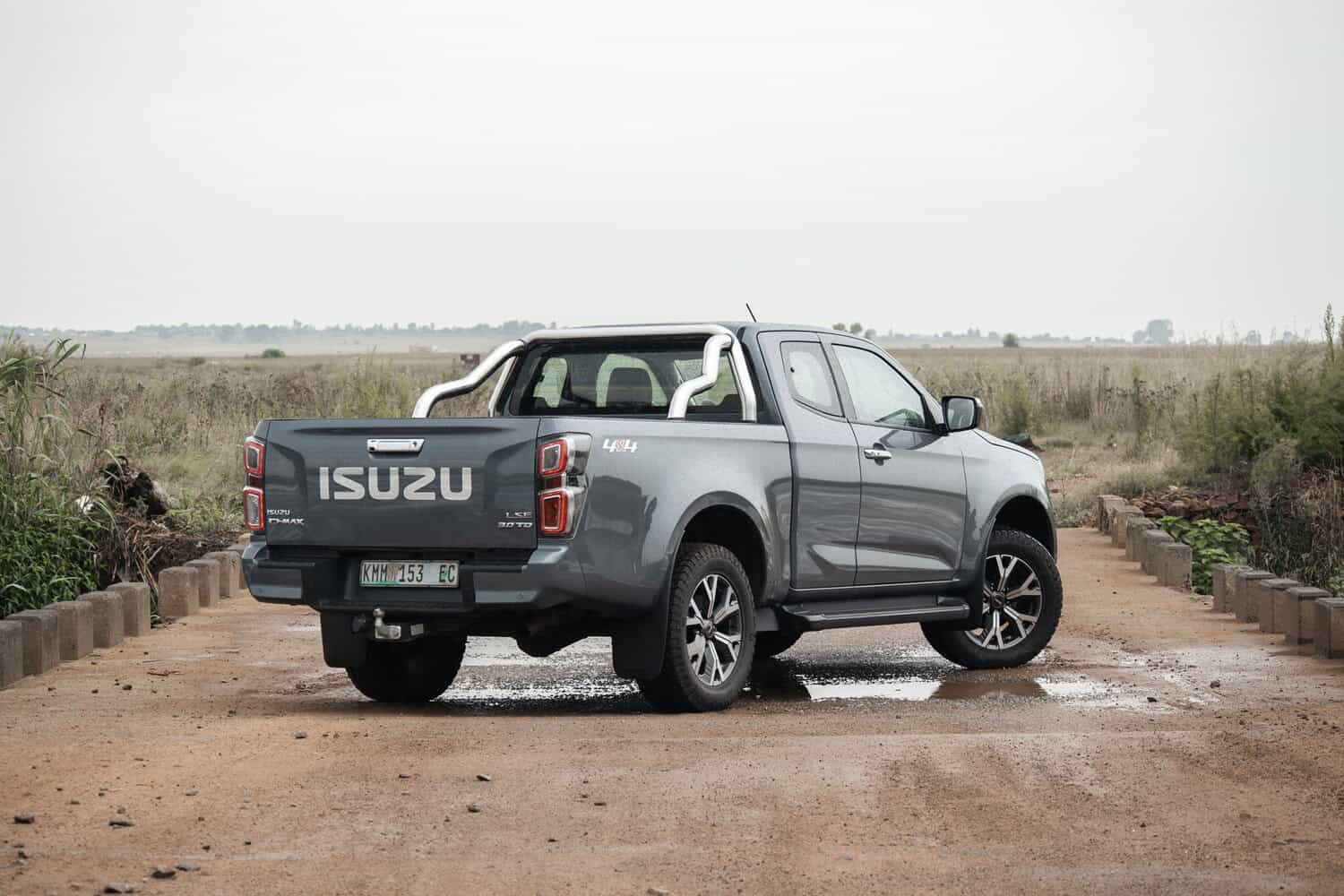
Williams Hunt Roodepoort proved to be the closest and, after a somewhat tricky and tiresome booking process, we were asked to drop the vehicle off after 08h00.
We also appreciated the shuttle service, especially as the distance to The Citizen’s office was beyond the dealer’s stipulations.
By midday, we were informed that the service had been completed and asked if the shuttle service would again be required, to which we said yes.
Fixed: Yes and no
Cleaned and serviced, we were then informed that the wheel alignment issue we pointed out had been rectified.
The problem involved the wheel steering wobbling above 110 km/h and the D-Max pulling to the left.
Sadly, once on the road, it turned out that the issue had not been solved, suggesting something else might have been amiss.
While this didn’t hinder progress as its collection date drew nearer, it still came as a disappointment.
Ragged
The same applied to the lids of the storage area integrated into the floor of the rear shelf.
In past generations, Extended Cabs were fitted with storage boxes, which the current RA generation D-Max omitted upon its global launch in 2019.
Upon collection, one of the lids was separate from its material threads. The other, meanwhile, was attached to one.
Both were also badly indented, suggesting something heavy was placed on them to make them bend in that fashion.
Plain-sailing
These were the only qualms as the D-Max performed otherwise faultlessly throughout the three months.
Aside from the nine-inch infotainment system refusing inputs from a USB on the move, the cabin impressed with its comfort and easy ergonomics.
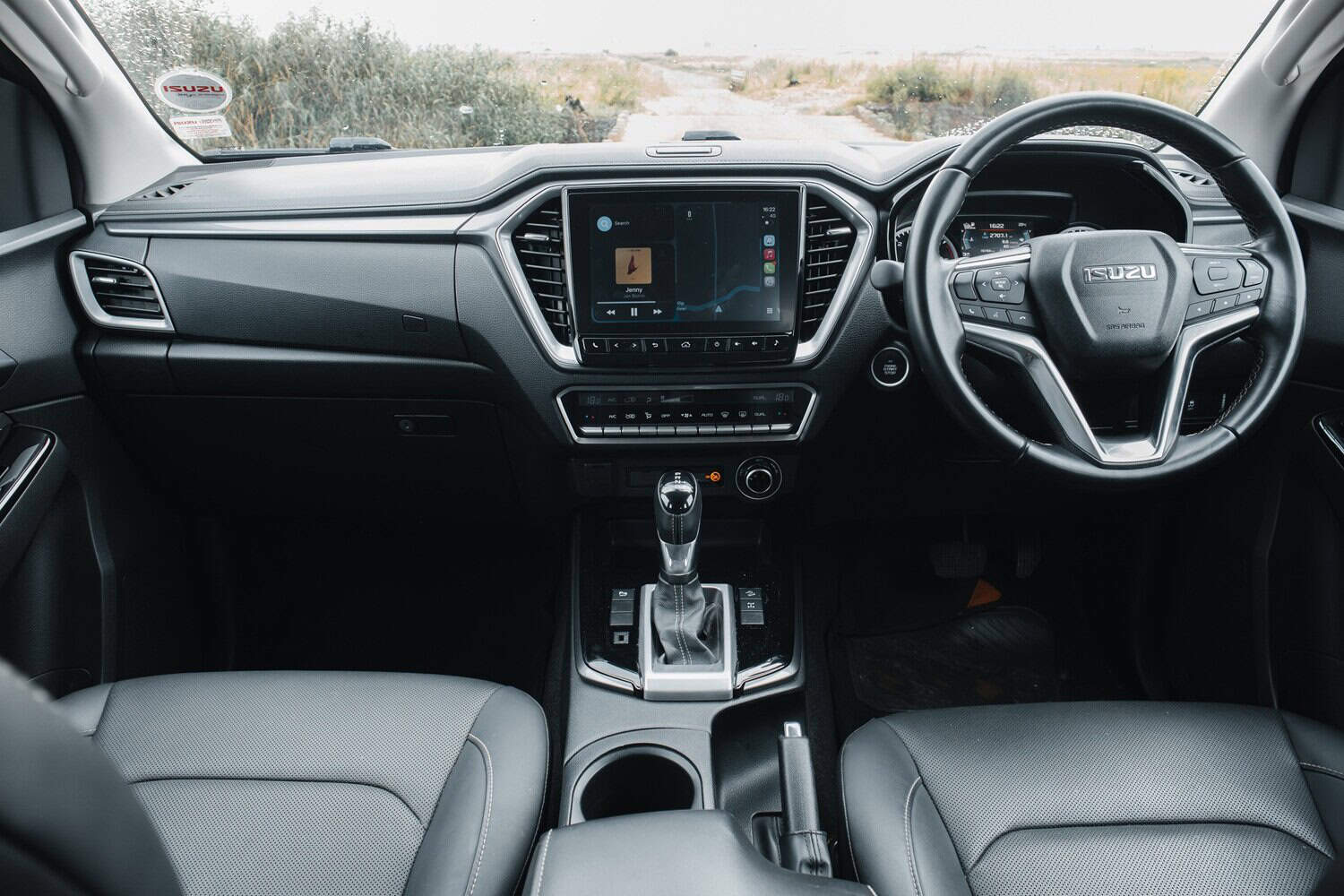
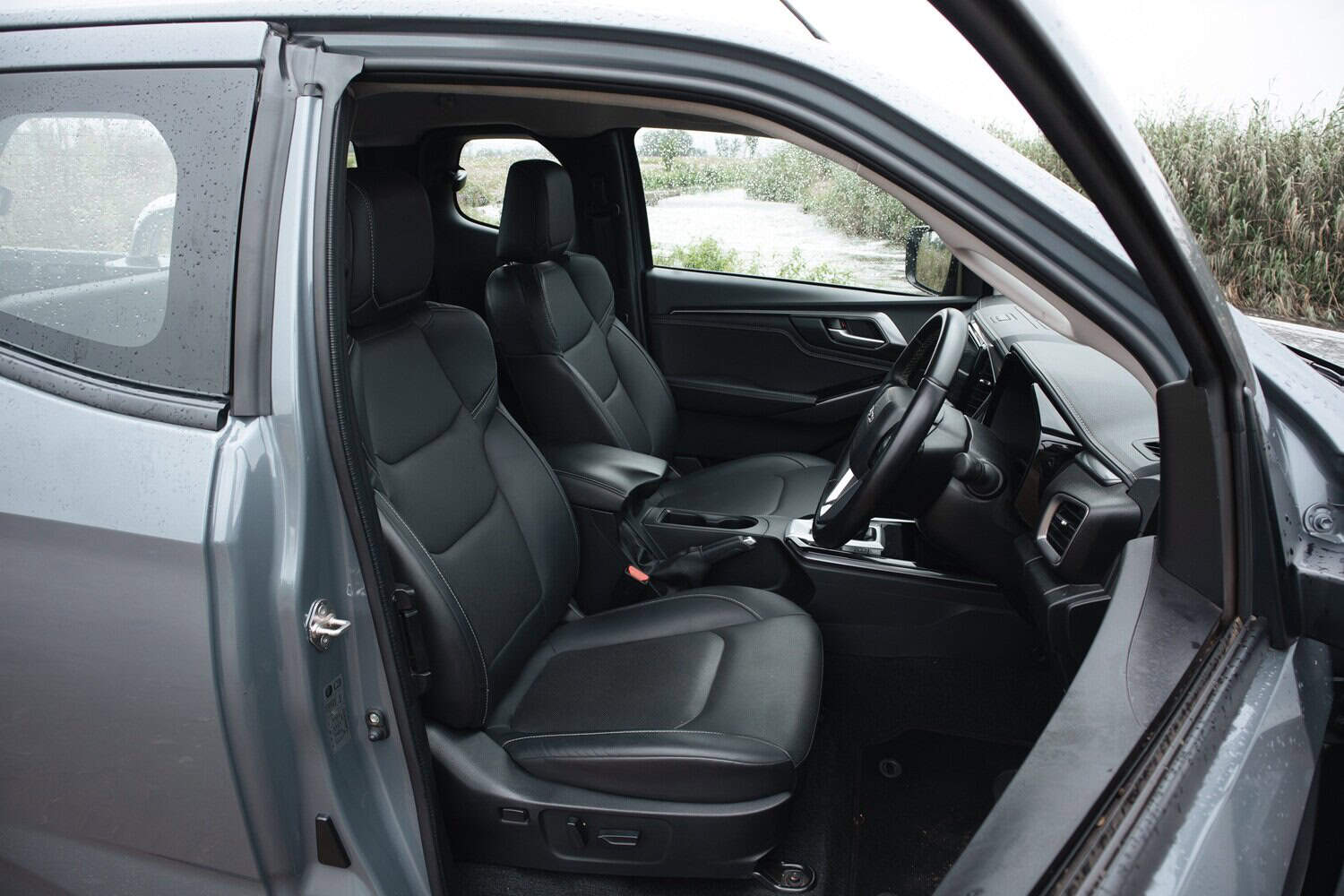
Especially impressive are the leather-upholstered seats, which feature an almost wraparound feel, and come with electric adjustability for the driver.
Admittedly starting to show its age inside against the comparative Ford Ranger SuperCab Wildtrak, the almost basicness was appreciated, as were the physical buttons at the base of the display, on the steering wheel and for the dual-zone climate control.
With the facelift D-Max around the corner, the hope is that the mentioned niggles will be sorted before production kicks-off.
Senseless remote engine start
Being the flagship Extended Cab derivative, the LSE lacks for little on the specification front, however, the remote engine start system was found to be of little use.
Once unlocked, the doors need to then be locked and the start button on the key fob pressed.
Bizarrely, unlocking the doors to get in causes the engine to turn-off, thereby defeating the system’s purpose.
Engine still impresses
Having shown little resistance to Jaco’s garden remodelling touches, the D-Max’s main drawing cards come in the form of the 3.0-litre DDI 4JJ3-TCX turbodiesel engine.
Hailing from 2002 in its original iteration, the engine has been refined since then after debuting in the N-Series truck.
Outputting 140kW/450Nm, the DDI is down 15kW/50Nm on the Ranger’s 2.0-litre bi-turbo and 10kW/50Nm on the Toyota Hilux’s 2.8 GD-6.
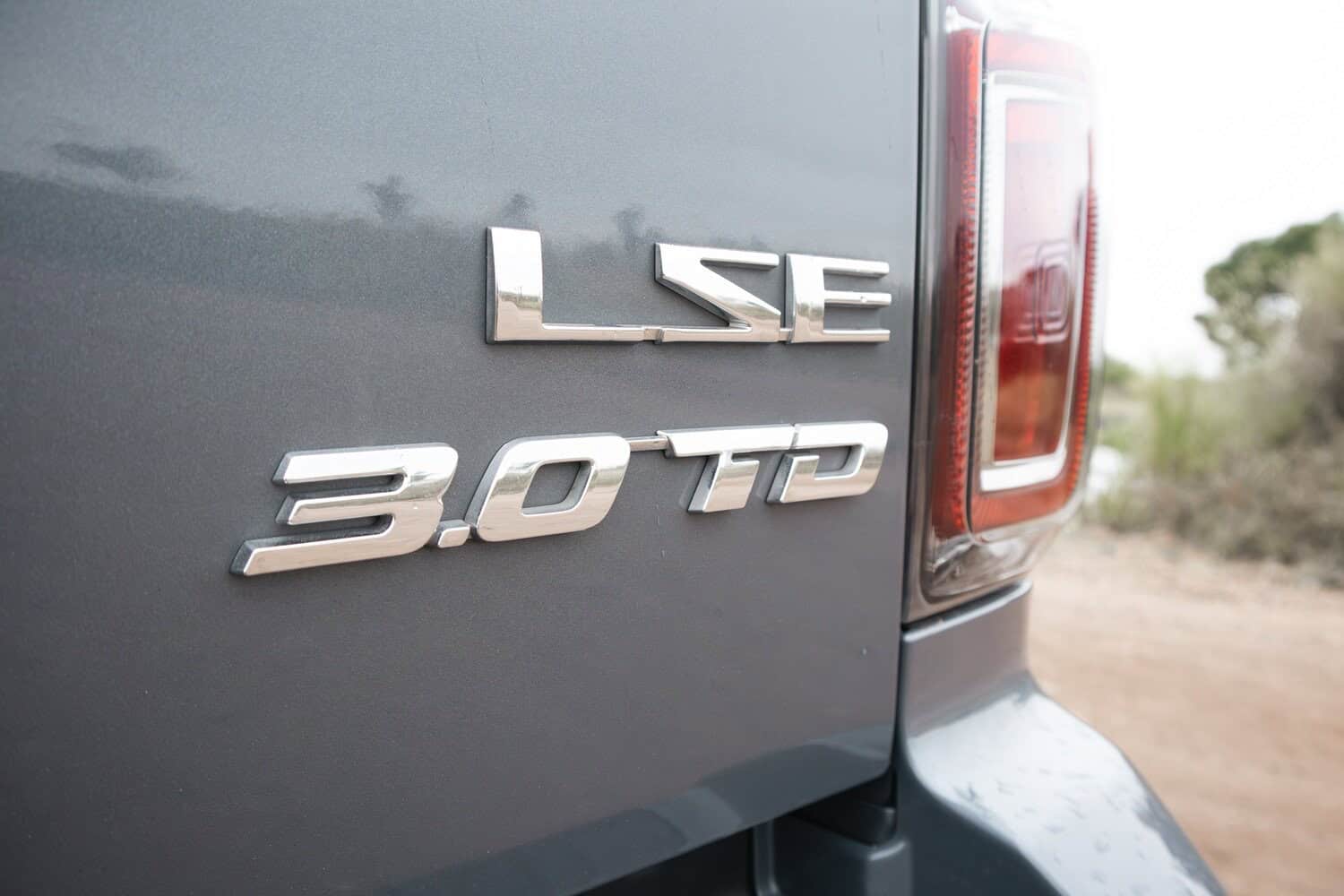
However, it its lower stressed and not required to work as hard due to its displacement.
While typically Isuzu raucous on start-up, it is still responsive and torquey enough not to feel underpowered.
Tipping the scales at 2 020 kg, the D-Max’s momentum is not hampered much by the often indecisive shifting habits of the six-speed automatic gearbox.
Fortunately, the ‘box’s tendency to skip ratios when shifting down can be overridden by using the sequential manual override.
Fuel consumption
What’s more, the engine’s long standing reputation for frugality wasn’t found amiss either.
Having registered 9.1 L/100 km upon collection, it rose to 9.3 L/100 km before dipping to nine-litres per 100 km at the onset of the festive season.
Eventually, the trip computer display dropped to 8.8 L/100 km, where it stayed for the rest of the three-months.
On and off-road
Long known for its car-like ride quality since the KB era, the D-Max is resoundingly beaten by the Ranger in the realms of modern bakkie ride quality.
However, it still offers a good balance between bakkie and SUV despite its more workhorse than leisure focus.
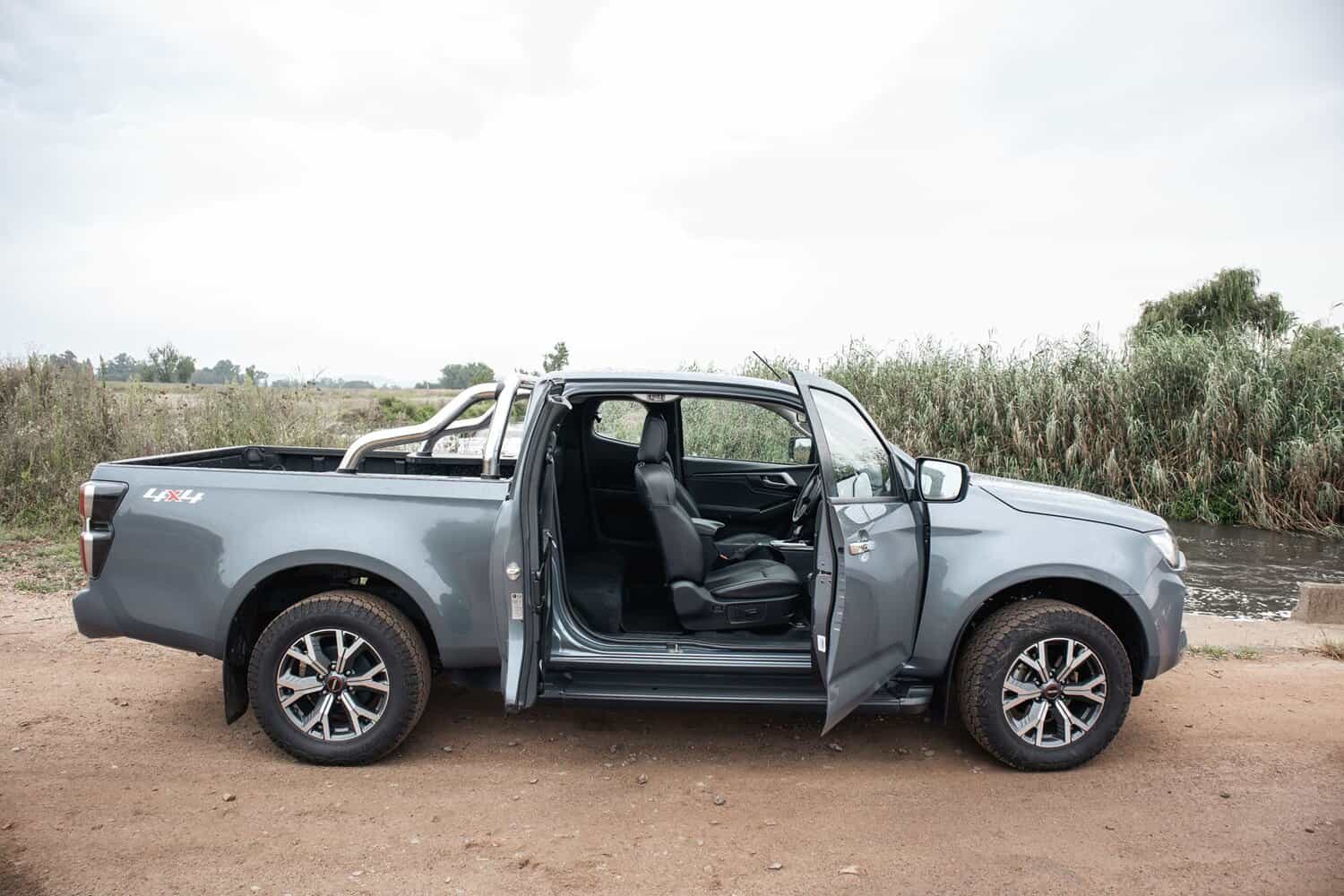
Aside from the part-time four-wheel drive system, the Isuzu has a ground clearance of 232 mm and Hill Descent Control. Also standard is a locking rear differential.
While the use of the all-paw gripping system was utilised seldom, taking the D-Max on a few gravel roads with the system switched to 4H didn’t result in any nasty surprises.
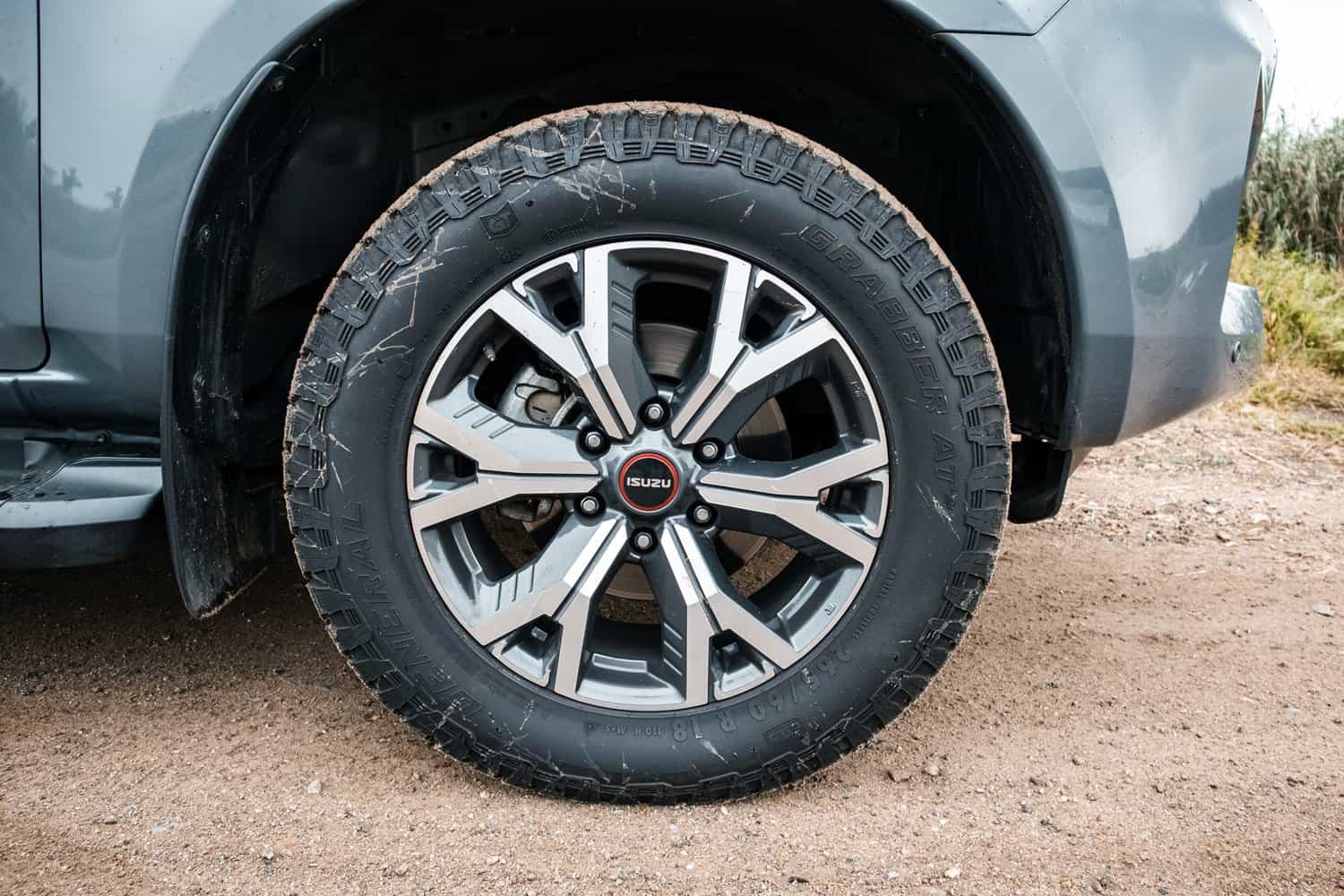
Composed and surefooted, the Extended Cab was found to be somewhat more comfortable on gravel than tar.
This can most likely to be attributed to the 18-inch alloy wheels being wrapped in General Grabber AT3 all-terrain tyres.
Conclusion
According to a report by cars.co.za, the D-Max Extended Cab finished third of the three cab-and-a-half bakkies sold in South Africa last year with sales of 1 998 units.
Comparatively, Ford sold 3 604 Ranger SuperCabs last year and Toyota a total of 5 121 Hilux Xtra Cabs.
Priced at R774 100, the LSE is, however, the cheapest flagship by R98 400 and R77 700 respectively.
Admittedly not as powerful and probably not as well equipped, it is still no slouch when viewed as an overall package.
While it accounts for less sales than the single and double cab D-Max, it is still an enticing work-and-play option.
NOW READ: Isuzu D-Max Extended Cab ready to show ‘cab-and-a-half’ superiority
Support Local Journalism
Add The Citizen as a Preferred Source on Google and follow us on Google News to see more of our trusted reporting in Google News and Top Stories.