Higher long-term interest rates are also likely.
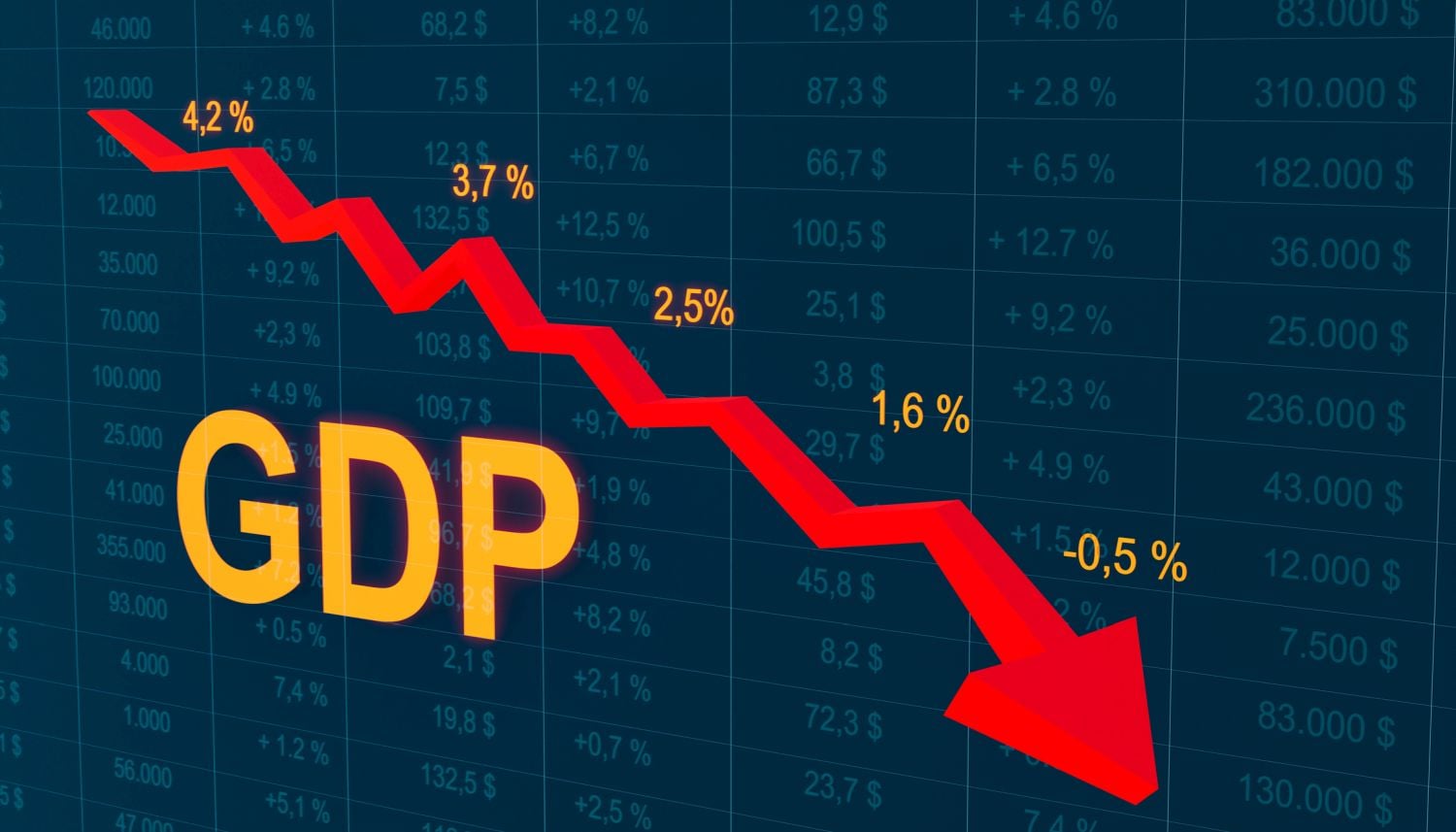
A decline in the GDP also means fewer new jobs can be created. Picture: iStock


South Africa’s economy has taken a step backwards, with gross domestic product (GDP) contracting by 0.2% in the second quarter of 2026, a setback that could be felt far beyond the country’s economic figures.
The decline comes largely against the backdrop of the outbreak of war in the Middle East, which has disrupted global trade, pushed up energy costs and added pressure to an already fragile economy.
Slower growth means businesses may have less room to offer salary increases, create new jobs or avoid retrenchments. At the same time, weaker government revenue could also reduce the chances of meaningful tax relief for households next year.
For South Africans already battling rising living costs, the latest GDP decline could make it even harder to stretch their incomes.
GDP decline comes as a surprise
Professor of Economics at North-West University, Waldo Krugell, told The Citizen that the decline comes as a surprise and is worse than everyone predicted.
“I think everyone is surprised that the economy contracted by 0.2%. The decline was worse than we thought. The consensus was for 0.1% growth,” he said.
“It’s true that it’s already water under the bridge, but it’s important to keep an eye on the scoreboard, even though it only gets updated this late. Slow economic growth means few new jobs and few salary increases.”
Manufacturing decline means job losses
According to Stats SA, the manufacturing industry decreased by 1.8%, contributing -0.2 percentage points. Seven of the 10 manufacturing divisions reported negative growth rates. The largest negative contributions were reported for the food and beverages; furniture and ‘other’ manufacturing; and basic iron and steel, non-ferrous metal products, metal products and machinery divisions.
The mining and quarrying industry recorded the largest decline, at 3.0%, contributing -0.1 percentage point. The largest negative contributors were platinum group metals (PGMs), manganese ore, gold and iron ore.
Krugell added that a contraction, like the one the manufacturing sector is experiencing, means job losses.
Tax relief for next year under attack
He said weak economic growth means less investment and less tax revenue for government, leaving less money for tax relief and public spending while making it more expensive for the state to borrow.
“A contraction also means less investment and weaker growth prospects in the future. Many of the major macroeconomic ratios rest on the size of GDP, in other words, the growth of the economy.
“Little or no growth means less-than-budgeted tax revenue. This reduces the chances of tax relief next year, or additional government spending where it is needed. It also means a weaker government debt-to-GDP ratio. That means higher long-term interest rates. Taken together, the economy must grow.”
Households to feel the squeeze
Christelle Grobler, a macro-economic analyst at Standard Bank, also acknowledged that the GDP contraction was slightly larger than expected during the quarter. Still, the first-quarter growth rate was also revised down due to affordability and cost pressures from the war.
She noted that high uncertainty has negatively affected sentiment and confidence, as reflected in the still-weak private sector gross fixed capital formation during the quarter.
“The expenditure on GDP data points to some resilience on the part of consumers,” said Grobler. “Household consumption expenditure increased by 0.4% every quarter, with food and non-alcoholic beverage expenditure remaining quite strong.”
Risks to economic growth
Higher exports and rising inventories supported South Africa’s economic growth, while strong imports weighed on growth. However, the continued strength in imports of machinery and equipment could be a positive sign, suggesting businesses may be preparing to increase investment in their operations in the months ahead.
“The risks to the growth forecasts have certainly increased, and to the downside one should also note that the forecast risk is exceedingly high this year, given the benchmarking and rebasing of our national accounts data, which is currently underway.
“And Statistics South Africa, as well as the Reserve Bank, will release updated GDP data later this year.”
Revise national accounts
Stats SA said on Tuesday it is also preparing to revise its national accounts, which could change how it measures the size and growth of South Africa’s economy.
The agency, together with the Reserve Bank, is rebasing the national accounts to 2022 and incorporating new datasets, with the revised figures expected to be published in October 2026.
This also means the GDP numbers could change when Stats SA publishes the rebased figures. This could affect the reported size of the economy and some economic ratios, such as debt-to-GDP and tax revenue relative to GDP.
The future
Investec chief economist Annabel Bishop told The Citizen that GDP growth is expected to be around 1.2% year-on-year.
She also noted that the construction industry increased by 0.4%. Residential and non-residential buildings increased.
“We continue to expect GDP growth of around 1.2% year-on-year this year, although the persistence of the Middle East War and elevated oil prices in the remainder of 2026 may see this forecast drop to 1.0%.”