
Western Cape seeks disaster status as drought and fires intensify pressure
With Knysna’s water reserves critically low and firefighting funds stretched, provincial authorities are accelerating emergency measures to avert a potential day zero and sustain wildfire response efforts.
Anton Bredell, the Western Cape Minister for Local Government, Environmental Affairs and Development Planning, yesterday said he will approach the provincial cabinet with a request to motivate for a provincial disaster classification, based on the current drought in the Southern Cape, as well as the widespread wildfires the province has experienced in recent weeks.
“A disaster declaration from the National Disaster Management Centre will allow us to focus across line functions and also to move funding quickly between programmes if and when needed,” Bredell said.
George Herald reports that Bredell made this announcement yesterday during a briefing by the Knysna Joint Operations Committee, co-chaired by the Department of Local Government and the Knysna Municipality.
Knysna’s main water source, the Akkerkloof Dam, is currently only 15% full, and without augmentation from rain or alternative sources, the town is now faced with a 10-day water buffer, down from 13 days a week ago.
The JOC is focusing on short term initiatives to add additional water to the supply system.
These include:
- The development of several springs with good-quality water
- The refurbishment of seven existing boreholes that need cleaning and new pumps
- The finalisation of an agreement to use 10 boreholes on private land
- An agreement to get access to water from a borehole at the mosque.
Bredell said urgency is needed from all role players to avoid a day zero situation in Knysna. “At this stage, Knysna consumes more water, 12ml per day, than it can supply.
“We need to get consumption down to 50l per person per day, and together with the efforts to develop additional sources, we will get through this difficult time.”
Wildfires
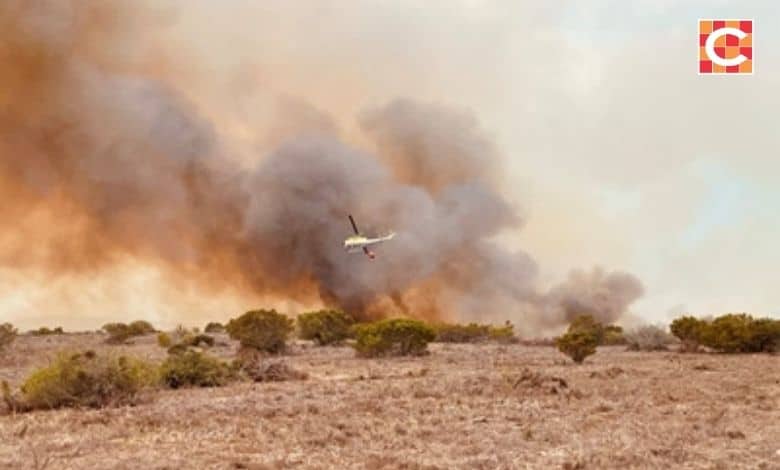
Turning to wildfires, Bredell said the fire season has been extremely busy to date, and with more hot and dry weather expected, the province will have to be ready to keep on implementing its wildfire protection strategy into April and May.
“Our aerial firefighting budget of R17m for this season is depleted, and we will now make internal financial adjustments to ensure the 21 aircraft at our disposal can fly, with a final costing being reconciled during the adjustment budget process later in the year.”
More than 100 000 hectares of land has already burnt, and the fires in the Overstrand and Cape Winelands have seen more than 500 firefighters working together to protect people, infrastructure and biodiversity.
Breaking news at your fingertips… Follow Caxton Network News on Facebook and join our WhatsApp channel.
Nuus wat saakmaak. Volg Caxton Netwerk-nuus op Facebook en sluit aan by ons WhatsApp-kanaal.
Read original story on www.georgeherald.com

