
Watch live: Finance minister delivers 2026 Budget Speech
While experts do not expect VAT increases, Finance Minister Enoch Godongwana will have the final say when he tables the national budget.
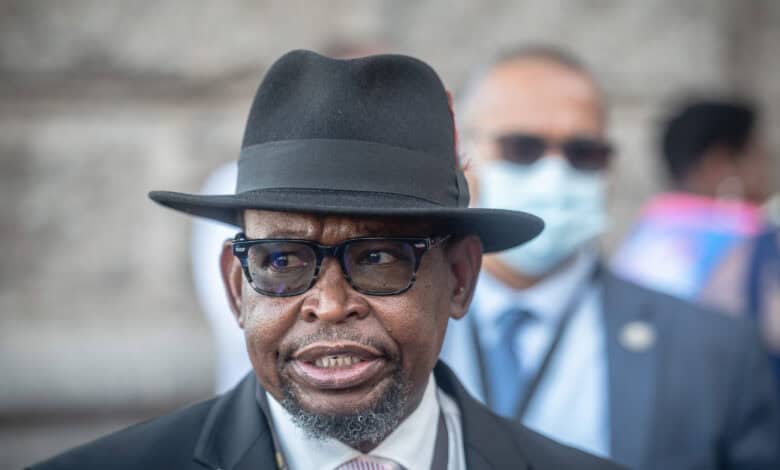
Experts and political parties have shared their expectations ahead of the 2026 Budget Speech, which Finance Minister Enoch Godongwana will deliver in Parliament at 14:00.
The Budget Speech follows President Cyril Ramaphosa’s State of the Nation Address, in which he outlined the government’s policy priorities and programme of action for the year ahead. The budget outlines how the government will fund these priorities.
According to SAnews.gov.za, the budget allocation aims to strike a balance between growing the economy and supporting the vulnerable amid limited resources.
During the same plenary sitting, Godongwana will also introduce the 2025 Appropriation Bill and table the 2026 Division of Revenue Bill, which Parliament will process in the coming months.
Last year, a proposed value-added tax (VAT) hike triggered widespread outrage from parties in the Government of National Unity, leading to the first cancellation of a budget speech in the history of South Africa.
This morning, The Witness reported that Business Unity South Africa CEO Khulekani Mathe said measures that raise revenue by putting more pressure on consumers, such as higher sugar taxes, personal income tax (PIT) or VAT, are very unlikely to be announced.
“The sugar industry is an industry on its knees, as evidenced by the possible liquidation of Tongaat Hulett, due to cheaper sugar imports,” said Mathe.
Warning against further tax hikes
Regarding PIT and corporate income tax (CIT), Mathe said there was no scope for increases and that further hikes would only harm consumers and businesses.
Mathe predicts Godongwana will announce additional funds to bolster the South African Revenue Service’s (SARS) ability to recover revenue.
Wayne Duvenage, the CEO of Organisation Undoing Tax Abuse, also poured cold water on speculation that VAT or PIT could increase.
He said last year’s decision to abandon a VAT hike shows that ‘credible alternatives to regressive taxation exist’.
“The October 2025 Medium-Term Budget Policy Statement (MTBPS) reinforced this approach, showing that expenditure restraint, curbing low-impact programmes and improved SARS revenue collection can materially ease fiscal pressure,” he added.
Other potential increases
While consumers are unlikely to face increases in VAT or CIT, PwC predicts that both the general fuel levy and the Road Accident Fund levy could rise, as the recent drop in fuel prices has created room for such hikes.
Using last year’s budget as an indicator, consumers are also expected to encounter price increases when shopping for tobacco products or alcohol this year.
In 2025, Godongwana announced above-inflation increases for both tobacco products and alcohol, with excise taxes hiked by 4.75% and 6.75%, respectively.
What political parties expect
Mahlengi Bhengu, the national spokesperson for the ANC, said the party anticipates that the budget will intensify reforms in electricity, logistics, water and industrial development to lift growth onto a higher, more employment-intensive path.
“Infrastructure must remain central to economic recovery. With over a trillion in projected public infrastructure spending over the next three years, the ANC expects sharper execution, improved project preparation and stronger crowding-in of private investment,” added Bhengu.
He said in tax policy, the party anticipates the withdrawal of previously announced increases and the adjustment of personal income tax brackets for inflation, signalling responsiveness to cost-of-living pressures.
Taxes
Mark Burke, the DA’s spokesperson for finance, said the budget must see adjustments in tax brackets and rebates in line with inflation.
“We can’t afford another year of stealth taxes and we definitely can’t afford explicit increases. As such, the DA expects that there will be no personal income or corporate tax hikes and definitely no VAT increases,” he said.
He added that the party expects the treasury to meet its commitment from the last MTBPS, where the debt-to-gross domestic product ratio for the coming year is set to decline, rather than rise as it has been doing since 2008.
“This is crucial because our country spends 22 cents of every rand on debt service costs that are now crowding out health, education and police spending. The DA is deeply concerned by the burgeoning [state-owned enterprises] debt and this must be halted,” he said.
IFP calls for focus on cost of living and gender-based violence
Nhlanhla Hadebe, the IFP’s chief whip, said they want the budget to address the cost-of-living crisis, local government reform and prioritise the fight against gender-based violence (GBV).
“Regressive measures must be revisited. South Africans cannot withstand policy decisions that increase transport costs, raise food prices, or worsen inequality. The 2026 Budget must demonstrate a truly pro-poor orientation, with targeted relief for low-income and working-class households,” said Hadebe.
He added that the budget needed to strengthen municipal revenue systems and among other issues, improve delivery of water, electricity, sanitation, and waste services.
The party is also calling for increased funding for GBV shelters and safe houses, as well as expansion of specialised GBV units within SAPS.
Watch the 2026 Budget Speech live:
Breaking news at your fingertips… Follow Caxton Network News on Facebook and join our WhatsApp channel.
Nuus wat saakmaak. Volg Caxton Netwerk-nuus op Facebook en sluit aan by ons WhatsApp-kanaal.
Read original story on www.citizen.co.za

