
Uniondale farmer convicted on all charges in cage trap leopard case
A South African conservation organisation has welcomed the conviction over the capture and killing of a protected animal on a Western Cape property.
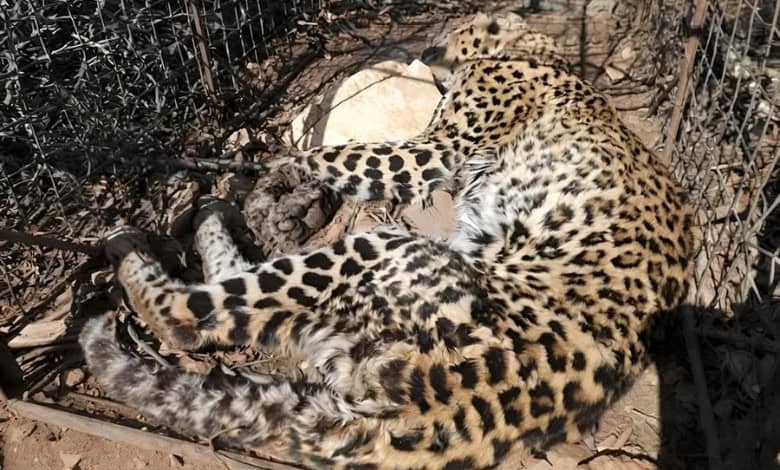
A leopard that suffered a prolonged and distressing death after being caught in a cage trap on a farm in Uniondale in the Klein Karoo has become the focus of a landmark court ruling, with farmer André Barnard found guilty on all six charges linked to the incident.
The George Herald reports that the Thembalethu Regional Court handed down the judgment last Friday (May 29), with sentencing expected on August 20.
The Landmark Foundation, a South African conservation NGO, has welcomed the conviction over the capture and killing of a protected leopard on Barnard’s property.
“This is, by any measure, a rare landmark conviction in the history of wildlife crime prosecution in South Africa, and it should be recognised as such. It sends a clear message that biodiversity crimes cannot simply be ignored or treated as routine farm management issues,” said the foundation’s Bool Smuts.
Farmer was aware of risk
The adult male leopard was found dead in a cage on Barnard’s farm after being left trapped without food or water for an extended period, ultimately dying from dehydration.
The foundation said the trap used was indiscriminate and capable of capturing a range of wildlife, arguing that the accused was aware of the risk on the property and had a duty of care to prevent such outcomes.
Smuts said the case highlighted both progress and persistent weaknesses in environmental prosecutions.
“While we acknowledge the work of the prosecution and the court in securing this conviction, the case also exposes how limited charging decisions can weaken environmental justice,” he said.
“In our view, the full range of environmental legislation was not utilised despite being clearly applicable.”
Barnard’s defence included a denial that he personally set the trap, a claim the court rejected.
Applications to have the case dismissed under Section 174 of the Criminal Procedure Act 51 of 1977 were also rejected.
Smuts described wildlife persecution in farming areas as a persistent issue, particularly involving so-called damage-causing animals, and said successful prosecutions remain rare.
“This conviction matters because it shows that even long-standing patterns of wildlife persecution can be challenged in court,” Smuts said.
The organisation confirmed it will continue to monitor the case and engage justice sector stakeholders on improving the prosecution of environmental crimes in South Africa.
Breaking news at your fingertips… Follow Caxton Network News on Facebook and join our WhatsApp channel.
Nuus wat saakmaak. Volg Caxton Netwerk-nuus op Facebook en sluit aan by ons WhatsApp-kanaal.
Read original story on www.georgeherald.com

