
Growing opposition within Afrikaans church over women in leadership
George church leaders say they want to remain part of the Gereformeerde Kerke In Suid-Afrika and are seeking to resolve the dispute through the denomination’s appeal process.
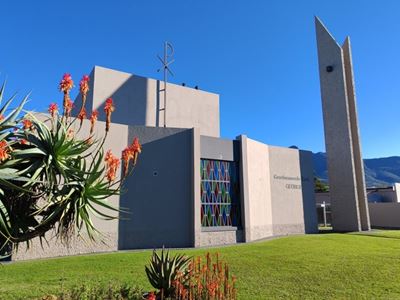
Tensions are escalating within the Gereformeerde Kerke In Suid Afrika (GKSA) as several congregations, including the Reformed Church George, openly oppose the General Synod’s directive on women serving as elders and ministers. It is warning that congregations refusing to comply could be regarded as having separated themselves from the denomination, reports George Herald.
The dispute centres on the General Synod’s directive, dated 8 January, requiring congregations that appoint women as elders to discontinue the practice within one year. Congregations that fail to comply, risk being regarded as having separated themselves from the GKSA.
Despite the growing debate, the GKSA has declined to publicly engage with the concerns. In response to a George Herald media enquiry seeking clarity on the objections, the denomination’s position and the process going forward, GKSA administrative manager Dr Wymie du Plessis replied: “No further correspondence or comment will be given to any journalist/newspaper. What has already been sent to all congregations of the GKSA in the media release of January 2026 will suffice.”
What the General Synod decided
In a letter dated 8 January to all Gereformeerde Kerke in Suid-Afrika (GKSA) congregations, General Synod chairperson Dr GJ Meijer and scribe Dr CA Jansen said the denomination had been grappling with the issue of women serving in church offices since 1988. They noted that the 2009 Synod resolved that women may not serve as ministers or elders, but that some congregations had continued appointing women as elders despite the decision.
According to the letter, the 2026 General Synod concluded that congregations failing to comply with synod decisions on women in office effectively remove themselves from the church denomination.
Congregations were called on to “repent” and uphold the synod’s decisions in obedience to Christ.
Congregations that had appointed women as elders were given one year to withdraw those appointments, while the relevant classis, a regional governing body of neighbouring Reformed churches, was tasked with providing pastoral support during the process.
The letter states that if a congregation continued to disregard the synod’s decision after the one-year period, the relevant classis (regional body) would formally record that the congregation was disobedient to Christ and had separated itself from the GKSA. If a classis failed to do so, the responsibility would pass to the regional synod and, if necessary, to a future general synod.
The letter says the decision was made out of a shared conviction that Christ governs His church through Scripture and the Holy Spirit, and urges church councils and members to examine themselves, respect the decisions of the church, and pursue unity, wisdom and faithfulness to Scripture. It concludes with an appeal for unity, peace and obedience within the denomination.
George congregation objects
In an open letter dated 12 July, Reformed Church George chairperson, Rev JJ de Bruyn, and scribe, elder CJ Coetzer, said the church council was writing “not to deepen wounds or to heighten tensions”, but out of “pastoral love and earnest concern” for the GKSA.
They said the General Synod’s letter of 8 January had left many congregations, church councils, families and marriages with “tension, uncertainty, and grief”.
While affirming that Christ alone is the Head of the Church and expressing their desire to remain part of the GKSA, the church council objected to the General Synod’s assertion that congregations failing to comply with its decision on women serving as elders were guilty of disobedience to Christ and should repent. The letter argues that this effectively places synod decisions on the same level as the word of God, which the church council says is contrary to Scripture and the Reformed confessions.
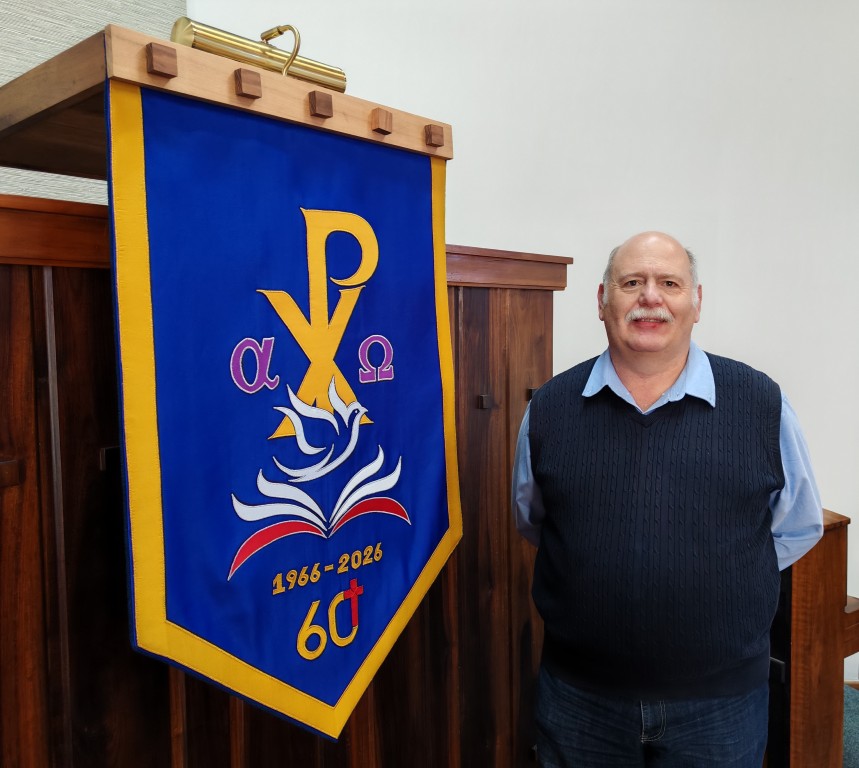
The church council further argues that Article 31 of the Church Order allows synod decisions to be challenged if they conflict with Scripture or the church order. It describes the General Synod’s decision to regard non-compliance as self-separation from the denomination without first following due church process, as “blasphemous, arrogant, and outrageous”.
It also states that it considers the decision ultra vires (invalid) and does not regard the 2026 decision, its one-year deadline or the prescribed declaration of separation as binding while the church’s appeal process is under way.
George church explains its position
Responding to a George Herald media enquiry, De Bruyn said the congregation’s open letter “does not deal directly with women elders”. Instead, he said, it addresses the General Synod’s decision that congregations which retain women elders should be regarded as having “self-separated” from the GKSA.
De Bruyn also clarified that, contrary to reports in other publications, the church would not be submitting a formal objection (gravamen) against the General Synod’s decision. Instead, it would submit a point of description to the next meeting of Classis Boland, asking the regional church assembly to consider the matter.
He confirmed that the church council had resolved not to comply with the decision contained in the General Synod’s letter of 8 January. Explaining the congregation’s position, he said: “We cannot alienate congregations that still want to remain part of the GKSA.”
Asked what the congregation hoped to achieve, De Bruyn said: “As a church council, we believe that we should walk the path of love together, with Jesus Christ as the only Head of His Church.”
Regarding concerns that the dispute could divide the denomination, he said: “We are, in fact, trying to reach out in love. Unfortunately, there are differences of opinion, but these do not necessarily have to lead to division.”*
According to De Bruyn, at least eight other GKSA congregations have responded in a similar manner.
Appeal for unity
Despite its objections, the church council emphasises that it remains “without reservation” a full member of the GKSA and has no desire to leave the denomination.
Instead, it says unity should be founded on a shared faith in Christ rather than “common obedience to every synodal decision”.
The letter concludes with an appeal for churches to exercise love, patience and humility, to refrain from treating congregations as separated while church processes are still under way, and to do everything possible to prevent schism within the denomination.
Breaking news at your fingertips… Follow Caxton Network News on Facebook and join our WhatsApp channel.
Nuus wat saakmaak. Volg Caxton Netwerk-nuus op Facebook en sluit aan by ons WhatsApp-kanaal.
Read original story on www.georgeherald.com

