
Animal activists call for end to SA tiger breeding
Government inspections across three provinces uncover hundreds of captive tigers, but officials admit there is no single national register to track them.
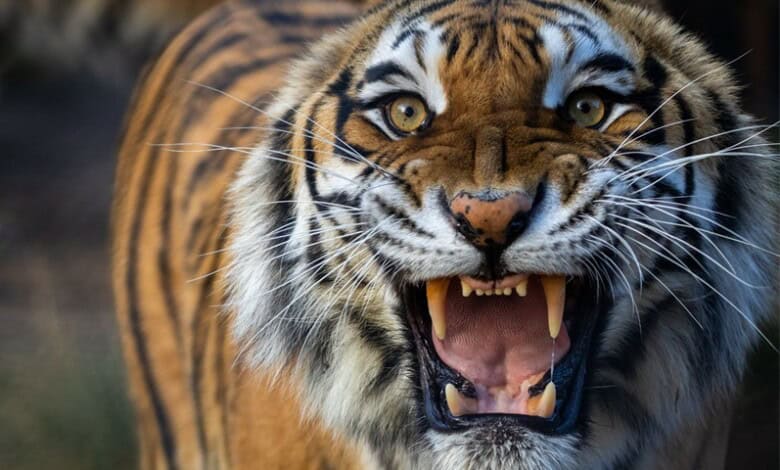
On International Tiger Day, today (July 29), animal welfare organisation Four Paws renewed its call for South Africa to phase out the commercial breeding and trade of captive tigers and other big cats, arguing that the industry continues to fuel global concerns about wildlife trade.
Pretoria Rekord reports that this call comes as the Department of Forestry, Fisheries and the Environment (DFFE) confirmed that 734 captive tigers were recorded during joint compliance inspections conducted with provincial conservation authorities since the 2023/24 financial year.
The department stressed that the figure is not a definitive national total, as captive tiger numbers fluctuate due to births, deaths, imports, exports and other lawful movements of animals.
According to DFFE director of communication services Zolile Nqayi, South Africa and the department do not have a single, continuously updated national register of captive tigers.
Instead, records of captive breeding facilities and the animals kept there are maintained by provincial permitting authorities in terms of the National Environmental Management: Biodiversity Act.
Nqayi said 251 big cat breeding facilities in Limpopo, North West and the Free State have been inspected since the 2023/24 financial year.
The inspections assessed compliance with biodiversity legislation, permit conditions and regulatory requirements at facilities housing lions, tigers and other big cats.
Four Paws raises transparency concerns
Animal welfare organisation Four Paws said one of its main concerns is that there is no comprehensive national register.
The organisation said South Africa has become a major centre for the commercial breeding, keeping and export of captive tigers, despite the species not being indigenous to the country.
“Tigers do not belong in breeding facilities far from their natural range,” said Fiona Miles, director of Four Paws South Africa.
“What we are seeing is an industry driven by profit, where these animals are bred and traded as commodities rather than protected as the wild beings they are,” emphasised Miles.
She said fragmented regulation has enabled the captive breeding industry to expand with limited transparency.
“The lack of effective, unified regulation not only puts individual animals at risk but also undermines global efforts to protect big cats in the wild,” she said.
She called on the government to end the commercial exploitation of captive-bred big cats, close breeding facilities and strengthen legislation to eliminate regulatory loopholes.
Miles also raised concerns that tiger cubs are used for tourism interactions, including handling, petting and photographs, before entering other forms of commercial exploitation later in life.
Asked whether these activities are regulated, Nqayi said they are not regulated under national policy or legislation.
Activists said South Africa’s captive tiger industry requires stronger national oversight, while government said provincial authorities regulate facilities and permits.
Export numbers and international trade
The department responded to concerns about tiger bones, body parts and the illegal wildlife trade.
Nqayi said South Africa regulates international trade in tigers through the Convention on International Trade in Endangered Species of Wild Fauna and Flora. under which tigers are listed on Appendix I. Any international movement of live animals, body parts or derivatives is therefore subject to strict permitting requirements.
He said measures to prevent captive-bred tigers or their body parts from entering illegal international trade include inspections of imports and exports, enforcement action where non-compliance is detected, co-operation with provincial conservation authorities, the Border Management Authority and the SAPS, monitoring at designated ports of entry and exit and investigations and prosecutions involving wildlife crime.
According to information supplied by the department, no tiger parts were exported from South Africa between 2022 and 2024.
Instead, export permits issued during that period related to live tigers for breeding and zoological purposes.
In 2022, permits authorised the export of 47 live tigers to Indonesia, Chile, Zimbabwe, Malaysia, the United Arab Emirates, Iraq, Cambodia and the Philippines.
In 2023, permits were issued for 83 live tigers exported to Mali, Iraq, Libya, Indonesia, Mozambique, the Philippines, Zimbabwe and Uzbekistan. One hunting trophy permit was also issued for Kuwait.
During 2024, permits authorised the export of 12 live tigers to the United Arab Emirates, Indonesia, Uganda, Tanzania and Qatar.
Nqayi said export permits are generally issued by provincial conservation authorities, which are also responsible for maintaining records of those transactions.
Government maintains current stance
Four Paws argued that South Africa should phase out the commercial breeding and trade of captive tigers altogether.
“South Africa has the opportunity to take a global leadership role in protecting big cats,” Miles said.
“By ending the commercial breeding and trade of tigers, we can help break the cycle of exploitation and contribute to the conservation of these magnificent animals worldwide.”
The DFFE said it remains guided by existing government policy and legislation and did not indicate support for phasing out the commercial captive breeding and trade of tigers.
Nqayi said joint compliance inspections with provincial authorities are continuing during the 2026/27 financial year in the Eastern Cape and Western Cape. The department said no decision has been taken on whether the inspection findings will be made public.
Breaking news at your fingertips… Follow Caxton Network News on Facebook and join our WhatsApp channel.
Nuus wat saakmaak. Volg Caxton Netwerk-nuus op Facebook en sluit aan by ons WhatsApp-kanaal.
Read original story on www.citizen.co.za

